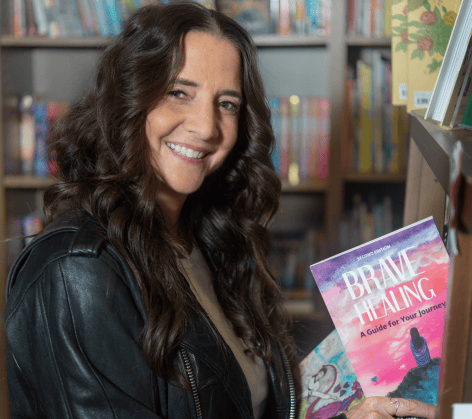

A thought leader is someone who shares original thinking that helps their industry move forward. AliceAnne Loftus is one of those people. She had something to say about women in leadership, and instead of keeping it to client conversations and the occasional LinkedIn post, she put it on the page where it could actually do work in the world.
That book is called We Lead. And here’s what it did for her.
Three women hired her as a business coach the moment they found out it was on the way. Not after the launch. Before.
Once the word got out, that was enough to seal the deal. The book hadn’t even hit Amazon yet, and it was already doing the work for her.
I tell her story a lot, because it’s everything I want authors to understand about what becoming a thought leader actually does for your business. The book itself is almost beside the point. What it signals is the point. People hire thought leaders. A book makes you one before you ever say a word.
I’ve been in this work for a long time. I’ve watched more than 100 lead authors, and thousands of healers and entrepreneurs publish books with us, and I’ve watched what happens to them after. I’ve also made plenty of my own mistakes trying to figure out how to “position” myself in this industry, before I figured out the position I wanted was the one I’d been resisting all along: contributor.
Not a guru. Not an expert with all the answers. A contributor. A brave voice in a conversation.
That’s what real thought leadership looks like. And in this post I want to walk you through how to actually build it, the trap that catches almost everyone, and the specific ways I’ve watched our authors turn one book into a platform that keeps working for years.
The Guru Trap (And Why It’s Killing Your Authority)
There is so much pressure out there to claim you have the magical modality that fixes everyone’s problems. You’ve probably felt the pressure to step up as the ultimate expert or authority. But buying into the ego-driven desire to be the “guru” is a trap.
The truth? Nobody has the answer for everyone. And no one modality works for every single person.
I see this trap every week. Brilliant healers, visionary entrepreneurs, gifted practitioners (people who have actual wisdom to share) twisting themselves into pretzels trying to position themselves as THE authority. The one with the secret. The one who cracked it.
It doesn’t work. The ones who try to be the guru actually limit their reach.
The mark of a real master is knowing that you aren’t the only one who can help someone. Instead of exhausting yourself trying to do it all alone, realize that your impact actually has a 10x result when you make a collaborative contribution alongside like-minded souls to solve a big problem.
Think about a magnificently produced Broadway musical. Being a part of that badass expert ensemble is a much bigger gift than trying to put on a one-man show.
Drop the guru act and you’ll catapult yourself further, faster, and with way more purpose and power. Because thought leadership isn’t about having all the answers. It’s about empowering the people you serve to connect with their own inner wisdom and body-mind guidance system, helping them realize they are their own guru.
What Thought Leadership Actually Looks Like for Healers and Entrepreneurs
If you’ve ever Googled “thought leadership examples,” you already know the search engine results page is full of corporate case studies, reports, whitepapers, and cover stories from people running multinational firms with research departments behind them.
That’s not us. That’s not our authors. And honestly? That’s not most of the people building real movements right now.
For healers and visionary entrepreneurs, the most effective thought leadership move I’ve watched (more than 100 times now, give or take) is publishing a book. Not because a book is magic. Because a book is the only format that gives you all of these in one piece: instant credibility with people who haven’t met you, a structured argument for your perspective, a reason for podcasts and stages to invite you, and a self-development journey that changes who you become while you’re writing it.
A book is also a contribution. Not a claim to the throne. You’re adding your voice to a conversation that needed it. (This is exactly why we built our entire methodology around this idea, by the way. We call it Brave Story Medicine™, and it’s the foundation behind every author we work with.)
Now let me show you what this actually looks like in practice.
Three Real Thought Leadership Examples From BHP Authors
Forget the corporate examples. Here’s what real authority-building looks like for the people we actually serve.
AliceAnne Loftus and the book that booked her clients before launch
I already told you about AliceAnne. Three new coaching clients before We Lead was even published. One to two speaking events every month, with the book either selling at the event or baked into her speaking fee.
What I love about her example is how practical it is. She didn’t claim to be the world’s leading authority on women in leadership. She wrote her contribution to the conversation, made it good, and let the book do its work. The clients showed up because the book signaled expertise without her having to manufacture it on social media.
When you step up and publish your legacy, you aren’t just selling books. You’re opening doors to speaking gigs, clients, and collaborations you never even dreamed of.
Tara De Leon and the book that became her professional identity
Then there’s Tara De Leon, lead author of Hot Mess to Hot Mom.
In her first year after publishing, multiple new clients came to her specifically because they’d found her through the book. Tara told me the book gave her incredible credibility and confidence. People now introduce her as the “author of Hot Mess to Hot Mom,” and that single phrase positions her as the expert she already was.
Other professionals in the maternal health space discovered her brave words and invited her to collaborate on projects she didn’t even know existed. The book didn’t just bring her clients. It introduced her to peers and partners she would never have found through cold outreach.
Tiffany McBride and Timothy Stuetz: the contributors who built authority by collaborating
Now here’s where things get interesting. Because you don’t have to be a lead author or a solo author to build real authority through publishing.
Some of our most powerful thought leadership stories come from contributors. People who wrote one chapter alongside a couple of dozen other experts in a collaborative book.
Tiffany McBride has contributed to a long list of Brave Healer Publishing collaborations, including Shaman Heart, Mindset Mastery, and Healing Curious Humans. She’s used those chapter contributions to land podcast guest spots, expand her marketing, and boost class enrollment. The writing process actually helped her rebrand and start a new career, and she now gets constant interest and respect for her work. Beyond the professional growth piece, Tiffany said something that’s stuck with me: each book she contributed to “healed a part of me.” (She also said she gained “the best of friends” and a tight-knit support system, which is the part that gets me a little misty every time someone tells me.)
Timothy Stuetz has had a similar experience across his contributions to Brave Families, Writing: The Brave Healer’s Guide for World-Changers, and 100 Poems & Possibilities. The collaborations directly resulted in valuable new business connections and friendships. He told us the publishing process took his communication and writing skills “to new heights” and opened up entirely new channels of imagination and creativity. When asked what he’d tell someone on the fence about publishing? “Go all in! You will learn more about yourself and help others in the process than you can ever imagine.”
That’s the contribution model in action. You don’t need to headline. You don’t need the loudest voice. You just need to be one of the brave ones in the ensemble.
The Strategy I Coach Authors Through
If you’d asked me ten years ago how to build thought leadership, I would have given you a list of marketing tactics. Now I tell authors something different.
Start with the question almost everyone skips: what do you actually believe that’s different from what’s already out there? Not different for the sake of being different. Just genuinely yours. Your unique perspective is usually some combination of your lived experience, your professional training, and the specific clients you’ve helped over the years. It’s the thing you can’t help saying when nobody’s looking. The thing your friends are tired of hearing you talk about. (Don’t worry. That thing? That’s actually your gift.)
Once you know that, the next step is to write the book. Which sounds obvious, but it’s the part most people get stuck on for years. This is where Brave Story Medicine™ really comes in. The first three steps of our methodology (journaling, then reading your words out loud, then sharing them with someone you trust) are designed to get the brave words out of your body and onto the page without you talking yourself out of them along the way.
While you’re writing, build your platform. Don’t wait for the launch to start showing up. Blog. Post. Get on podcasts as a guest. Be visible in the spaces where your ideal reader already hangs out. The book becomes the anchor, but the platform is what makes it visible. This is the part most authors skip until it’s too late, and then they wonder why nobody’s buying.
Once you have the book, use it. The book opens doors to speaking gigs, podcast invitations, premium clients, partnerships, and media features, but you have to actually walk through those doors. Authors who treat the book as a finish line stop showing up after launch week and watch their momentum die. The ones who win? They keep going.
And then, eventually, they keep contributing. Real thought leaders don’t disappear after one book. They write another one, build a speaking circuit, host their own podcast, or start mentoring the next wave of authors coming up behind them. Thought leadership isn’t an event you check off your list. It’s a flywheel.
From Book to Stage: How Authors Find Speaking Opportunities
Speaking from your book is where the real growth happens. I’ll be honest with you: writing the book is actually the easy part.
Back in college, Public Speaking 101 was absolute torture for me. After I graduated, I literally ran in the other direction to avoid getting in front of a crowd. But as I built my business, I realized that if people were going to know, love, and trust me, I had to let them get to know me. And speaking was completely necessary.
So I started slowly. I read poetry in safe, supportive women’s groups. Then I pushed myself to do open mics in the DC area. That “Open Mic Therapy” gave me the confidence to start doing workshops and keynotes. Every time I step onto a stage now, it’s an opportunity to remind myself: You were born, so you’re worthy. Your message matters. Shine your light!
Writing a book helps you clarify who you are. Publishing helps you claim it. Speaking helps you live it.
Where to actually find speaking gigs as a new author
So many new authors think they need to wait for someone to hand them a microphone on a massive stage. The truth is, you just have to start creating your own stages.
The fastest entry point I know is podcasts, especially ones inside your own community. They’re absolute gold for authors looking to share their stories. I put together a list of 50 holistic health and wellness podcasts hosted by members of the Brave Healer community, which is a wonderful warm list of like-minded souls to reach out to for a guest spot. You can also do guesting collaborations where you interview each other and share audiences.
Then go local. Bring a copy of your book to your next networking event and give it away as a door prize. Reach out to local book clubs and offer to come speak at their meetings. Ask your neighborhood exercise instructor if you can make a quick announcement before class. (You’d be surprised how often the answer is yes.)
If there’s a big event you’ve been watching from the sidelines and desperately want to speak at someday, volunteer to help them out first. Volunteering is a long-game collaboration. It builds relationships with the organizers, and it makes it much more likely you’ll get noticed for their stage next year.
You can also host your own micro-events. You don’t have to wait for an invitation to start. Lead a Zoom room on a topic from your book. Host a free webinar. Ask a friend in another town to set up a workshop at her house and bring her people together for an evening.
And if all of that still feels too big? Hit the open mics. This was my personal “Open Mic Therapy” back when I was starting out. Attending local open mics or safe women’s groups to read poetry or excerpts from your book is powerful exposure therapy for your old limitations. It builds your courage muscle.
What I tell every new speaker
Speak from your lived experience. Stories will always win over statistics, every single time.
Regulate your body before you speak. Breathwork before you go on stage helps you regulate your nervous system, and it’s powerful healing all on its own. (This is something I learned the hard way after years of white-knuckling it through panic.)
Start small. You don’t need a massive stage right away. Say yes to a podcast. Lead a Zoom room. Host a local workshop. The stage will get bigger as your courage does.
And when that purpose-driven fear creeps in (and it will, every single time), remind yourself why you’re up there. The person in the audience needs your courage and your message way more than you need to be perfect.
Speaking is exposure therapy for your old limitations. Every time you step up to a microphone, you’re teaching your nervous system that it is safe to be seen.
That’s Grab the Microphone, the fifth and final step of Brave Story Medicine™. It’s the one where everything you’ve been building actually starts to live in the world.
Your Thought Leadership Starts With One Brave Word
Thought leadership isn’t a position you claim. It’s a contribution you make. It doesn’t require you to be the loudest voice or the most polished brand or the only authority on your topic. It just requires you to be brave enough to share what you actually know in a format that lasts.
For most healers and entrepreneurs we work with, that format is a book. Sometimes solo. Often collaborative. Always anchored in real experience.
If you’re ready to share your contribution and use a book to build the kind of authority that opens real doors, we’d love to chat. Whether you want to lead your own solo book, contribute a chapter to a collaborative project, or just see how the model works, our team can help you find the path that fits.
You were born, so you’re worthy. Your message matters.
Now, go shine your light.
Big love,
Laura
Frequently Asked Questions
What is a thought leader?
A thought leader is someone who shares original thinking that helps their industry move forward. They aren’t the loudest voice in the room or the person claiming to have all the answers. They’re someone whose perspective makes other practitioners, business owners, or readers think differently about what’s possible. For healers and entrepreneurs, the most effective way to establish thought leadership is by publishing a book that captures your unique perspective in a format that lasts.
How can you become a thought leader in your industry?
Start by getting clear on your unique perspective. Then, build a body of work that demonstrates it. Write the book. Build your platform alongside it. Show up consistently in the spaces where your audience hangs out. Most importantly, drop the pressure to be the ultimate guru. Position yourself as one expert voice contributing to a larger conversation. Real thought leadership is collaborative, not competitive.
Can you be a thought leader without a book?
Technically yes, but realistically? A book is the most efficient credibility-builder available to a small business owner or independent practitioner. It signals expertise instantly, opens doors for speaking and media that cold outreach can’t, and gives you a structured argument for your perspective in one place. Most thought leaders we work with had been building audiences through other channels for years, but the book is what turned that audience into a movement.
What’s the difference between thought leadership and personal branding?
Personal branding is about who you are. Thought leadership is about what you contribute. They overlap, but they aren’t the same thing. You can have strong personal branding without much original thinking, and you can have powerful thought leadership without a polished personal brand. Our advice is always to build both, with the contribution coming first.
How do thought leaders make money?
Most thought leaders monetize through some combination of speaking fees, books, courses, consulting, premium client services, and brand partnerships. The book itself usually isn’t the primary revenue stream, by the way. It’s the door-opener that brings in everything else. AliceAnne Loftus, for example, had three women hire her as a business coach before her book was even published, simply because they knew it was coming.
What’s the biggest mistake people make when trying to become thought leaders?
Trying to be the guru. You might feel pressured to claim ultimate authority, the magical modality, or the one true answer that fixes everyone. It’s exhausting, it limits your reach, and it isn’t how real thought leadership works. The mark of a real master is knowing you aren’t the only one who can help someone. Drop the guru act, position yourself as a contributor in a larger ensemble, and your impact will actually multiply.